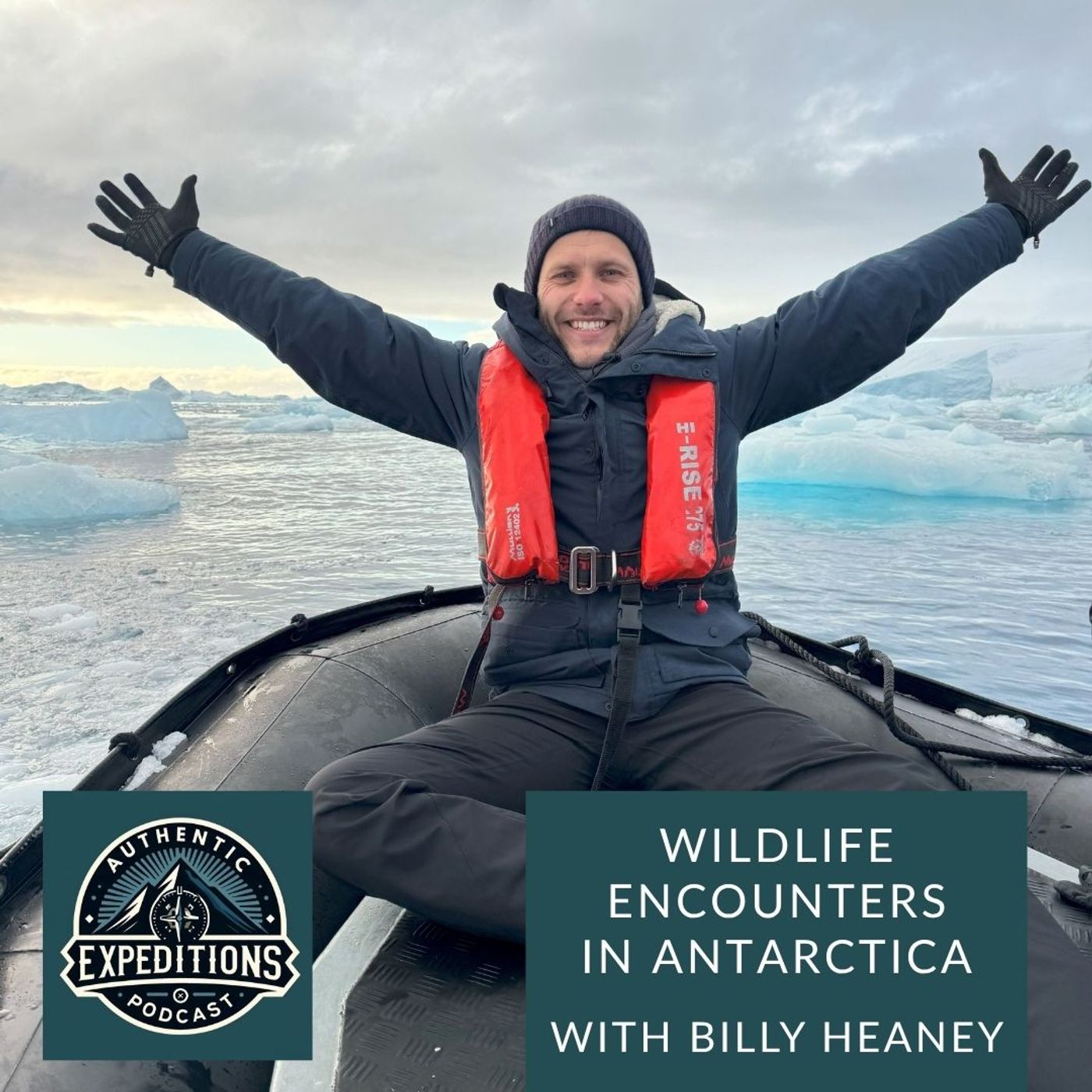
11. Wildlife encounters in Antarctica with Billy Heaney
Chapters
02:05 From University to Wildlife Guiding
03:15 Adventures in Scotland
04:55 The Magic of Wildlife Encounters
09:50 First Expedition to Antarctica
18:42 The Journey across the Drake Passage
22:55 Tips for Aspiring Wildlife Enthusiasts
26:58 Upcoming Adventures and Final Thoughts
Featured Cruises To find out more about expedition cruises contact Jane Middleton on +44 (0)7971 568155 or [email protected]
Plan your next cruising adventure with Authentic Travel company
Producer: Sue Stockdale
Sound Editor: Matias de Ezcurra
Welcome to Authentic Expeditions. The podcast where we inspire you to discover wild places, expedition cruising and learn from informative guests. I'm your host Sue Stockdale and today's guest is wildlife presenter and filmmaker Billy Heaney. He has an infectious passion for the sea and it has taken him from bird watching in the Hebrides to dramatic wildlife encounters in Antarctica. We dive into the thrill of spotting eagles, orcas and leopard seals, explore the challenges of crossing the infamous Drake passage and we hear what makes an expedition cruise unforgettable for guests and guides alike so grab your binoculars and sense of wonder as we head into the wild waters.
Welcome to the podcast Billy Heaney great to speak to you today. Thank you very much for having me. What's caught your eye outdoors this morning Billy? Just a couple of sparrows a black bird in a wood pigeon and my lazy golden retriever sat there half interested in watching them to be honest. Well we've dive straight and thinking about nature and of course for our listeners who are interested in expedition cruising for many of them traveling to the North Pole to the world is all about the wildlife.
What got you interested in wildlife as a youngster Billy I think it was something to do with the film wasn't it? I think it was you've done your homework yet I watched free Willie when I was two years old it's the first time my mum got me to sit still I think as a toddler big tub of biscuits and a big black and white dolphin on a screen and that was just me hooked whales and dolphins were my first love when I was about two years old and that was my gateway drug to the natural world. It's very lucky to grow up in the Lee Valley so as much as it had the ocean I had wetlands and a really nice bit of nature just north of London and spent a lot of weekends bird watching with my grandparents it was my grandma who got me my first bird book in binoculars when I was probably four or five something like that and that sparked that interest in what was on my doorstep and then it was one I got to University I went to the University of Exeter but on the Cornwall campus I was based in Falmouth so then I was by the beach as a hard place to leave but I was very lucky that there was this tour company called AK Wildlife Cruises and I became a guide I volunteered as a student and then threw my masters and after exams going out the weekends taking people out to sea seals whales dolphins basking sharks and from there it just went and did you think that that would turn into a career?
Absolutely not I think it was always been a dream growing up watching out in Brough Steeveau in Jeff Corwin on Discovery Channel is another hero of mine growing up watching all of those sorts of documentaries and programs growing up was always something that you know would be I'd love to do I by no means cracked it but the expedition and social media things started to pick up for me now which is really exciting when I first started doing my zoology degree I always thought I'd go and do a PhD I did my masters thought next step PhD then lecturing that was where I was going and then I realized how much I hated stats and analysis said then I was just like no I don't think that's gonna happen I don't think I've got the mental stamina for that but then the guiding things started picking up then there was COVID that all that kind of stuff went away for a couple of years and then a few years ago a friend of mine he's a guide for Hebron in Adventures and he was like the other guy's dropped out what you doing in September and I was like I'm sharing a bunk bed with you I want to vote in the Hebrides I hope and that's how my jump back into guiding came about and I'm actually heading up to open to jump back on in Adventures again getting back involved
guiding then open up the doors to Expedition which was something I always wanted to come back and I'm very glad that it has and when you have been up there in Scotland I'm imagining if it's Hebridean Adventures what are some of the amazing world life that you've seen up there? Well Eagles to kick off white-tailed Eagles and Golden Eagles I think from a birdwatching point of view that's definitely on everyone's bucket list particularly a seagull so I think the Eagles are a great way and you know touch words the last couple of trips that I've done up there within the first four or five hours of leaving Harbour we usually get seagull on the first evening which is just the perfect way to get people excited about this week long trip they're about to do but then on top of that very lucky the last couple of times hundreds of common dolphins around the bow everyone gets super excited with dolphins as I do as well and then Minke whales as well I mean I still haven't seen members of the West Coast community so we've got two orca that are still from this resident population there's lots of other orca that are visiting the UK in different areas around Scotland and covered further south but there's the two old boys John Cohen Aquarius that's my holy grail I still haven't seen them I missed them by days here in there of the last couple of summers and John Coen has finally just resurfaced off of the Merckin last week and again I was like oh no I'm like a few weeks off again so I'm
hoping he hangs around he's the holy grail of everything adventures for sure and what does seeing wildlife and shading your experiences of wildlife with others do for you Billy why do you do it just because I love it at the end of the day I'm never happier than I am either on the sea in the sea next to the sea as long as I'm salty and wet I'm happy if I get to share that with people and just share my passion and I think especially when it comes to being a guiding a lot of times people have never seen that before it doesn't matter if it's a Guillemot again at diving in an eagle flying over the boat or a dolphin throwing itself out of the water a lot of these experiences I get to share with people are their first experiences of seeing that particular animal and for me that's what it's all about a lot of the time our job is obviously spotting and finding the wildlife and touch wood we've done really well so far and it's one of the skills that I do have is I'm very good at spotting wildlife and it's just practice I've spent a lot of time out at sea on boats and some days you get treated to something out of blue planet in other days you see absolutely nothing but that's what keeps the addiction alive because you know at some point you
are gonna get another amazing moment and I think one of my favorite moments from guiding wasn't the last trip and it was the one the year before and then we had this guy called Nigel he was in his 60s it was a retired architect never been on a boat before right not even a tiny little boat and he booked a week long trip around the Hebrides and we were like brave well done and he was one of those people that didn't have a camera just watched it was really refreshing and on one of our days we had common dolphins before so we had seen them already but again this trip was the first time he'd ever seen dolphins but it was like day three of day four and this particular pod of common dolphins were quite energetic and they were just one jumping out over and over again he was on the rail looking out and I was just behind him and I just watched him for a minute sounds really creepy but I just watched him watching the dolphin and at one point this dolphin jumps out quite high so it was not quite high level because we were fairly high up but it looked from the perspective I had it was almost eyeball to eyeball with Nigel and he watched it and then he turned around and he was like a six-year-old boy and it was
just his expression and he just watched he wasn't fussed about the picture and he was like wow I like the hairs on the back of my neck went up and I was like that's what it's all about. What a lovely example and for those people who are on their first expedition crews who aren't experienced wildlife spotters are there any sort of common mistakes that they make that maybe you'd give them some tips to perhaps consider? I think sometimes I miss is not everyone but I've been on a lot of trips before where people just expect the wildlife to be there as if it's a zoo and sort of to remind people that these are wild animals they're gonna do what they want just because we saw them yesterday doesn't mean we're gonna see them today so I think there's a common misconception that if you're on a wildlife tour you'll guarantee to see wildlife so there is always that and then you know if people are on board with that then that's great if not it'd be quite a long day of work and it's quite tricky.
Prepare yourself that you should see something you might not see everything but you might see nothing and that's just part of the adventure but you're always gonna have a great experience out at sea or around the coast or whatever you're doing but I think trust your guides as well the more time you spend with your guide whether it's guides plural or a big ship or singular on a little boat listen to what they're doing look out for the signals they're looking for and if they're telling you to look at your four o'clock or your five o'clock yeah that is a big thing as well it's like don't say it's over there because that's just infuriating when you're out at sea because no one knows what you're looking but I think yeah remember your clock face as well that's quite an important tip but it's like calling things out you have a distance a rough approximation and a bearing from using your clock face I think it's just getting in your mind set that nothing's guaranteed but if you put the hours in especially if you're on like a big expedition cruise you're gonna find something I also wonder whether there's those people who want to spot wildlife to spot it a bit like the Nigel example you were giving us and there's those who
want to get fantastic photographs do you notice any difference in how both of those types of people may approach observation yeah I think that's a very good point actually because a lot of people can get so fixated and looking through their camera I mean I was guilty for that when I first started guiding and working is you're so preoccupied and you haven't got a photo and I was gonna believe you that you saw it I think people and this is just from some guests that I've had in the head of the days it's people that are just there to watch they've got a pair of binoculars around their neck they might have a camera that they get out of their bag every now and then but the people that they're just with binoculars I think they often have a better experience because you see more you just absorb in everything as well as like whether you've got dolphins or an eagle fly you're also more in the environment at the same time as well you're just looking with your own eyes might be looking at binoculars up I think photographers can often put more pressure on themselves to be like I need to get a picture of a panic dive in it or I need to get this dolphin jumping out of the water and I feel like yeah of course people want pictures I want to take
pictures I film things I want to take photos but I think you got to remember to put it down because the more memorable things from your trip are gonna be the moment when you put your camera down and I'm sure the photographers are listening to this podcast or thinking I don't want to do that it is addictive and you get those memories and of course taking photos important but I think it's about finding a balance yeah well you're reminding me of a professional photographer I interviewed for another podcast and he talked about observing first so an animal in situ say penguins for example seeing what they're doing how they behave and then you can work out how to construct the perfect shot exactly and with penguins as a subject having just got back from Antarctica you have got that time because especially sea birds and breeding season when they're all their colonies does a matter of their puffins in the UK or penguins down south you've got that benefit of the doubt with breeding birds this can be lots of them and you're gonna have time to just sit observe for five ten minutes first and that's a very valid point so yeah that is a good way of doing that for sure now you mentioned Antarctica there Billy and I was watching some videos you were
sharing from your journey down there what struck you about Antarctica because that was your first voyage then there wasn't it my first trip so I went down sort of end of March to early April this year it was the last trip of the whole season actually and oh boy did wasn't a journey getting there but we can come back to that but for me it was overwhelming I remember a week in I felt a bit overwhelmed and I've spoken to like Josh from Explorearth about this and it was like it was just the most breathtaking beautiful place I think I've ever been every minute you want to take a picture but you photos never do it justice so after two days that went out the window and I just just watched it was so how I never felt so small and I mean it's in a good way but I never felt so small in my life because we were the last trip of the season we knew there are other ships around because you can see them on the charts and stuff but we never saw them and being down at the bottom of the world with no other sign of man can't even apart from that one boat that you're on it was unbelievable if something happened it's just that but having that sort of feeling of isolation but then also having that community
spirit of all these people that you spend 10 nights with you've never met them before by the end of the 10 days you're like best mates and then you never see them again but having that sort of sense of community even though you felt so isolated that the end of the world was it was just a mind-vogling experience I was impressed with the community spirit more than I was expecting and the whole ship came together and shared all those experiences it was amazing and there's certainly plenty of wildlife to see in Antarctica what took your attention most well so my background is marine mammals are my first love and then so when I studied in Zoology my study species in the UK were gray seals so I spent a lot of time around wells and dolphins my first love seals are a close second if there were no decent well and dolphin projects when I was studying so I quite soft spot for groups of seals and sea lions and moorers so for me on top of the whales and dolphins the big thing I wanted to see was a leopard seal and that has been top of my wildlife bucket list since I was five other than Orcas everything but we'll come back to that but for yeah for Antarctica it was a leopard seal and then on our first full day bear
a minute took us three days to get through the Drake passage which we can touch on later I'd had an all deal get in there to the Antarctic Peninsula from start to finish it was about a week in the end we had all the flights of everything and then that first day when we got down to Nicholson Harbour so it was Trinity Island and we landed on Nicholson Harbour in the morning and we had like this amazing encounter with Gentoos and we saw a leopard seal swim round this little rocky outcrop and I technically had seen a leopard seal but it was a glorified football bobbin past the rock right I was like I really hope that's not it I technically have seen one but I felt like I haven't seen it because it's quite distant and then that afternoon we ended up in Sierra cove and we had this she was nearly about four meters long the females are bigger which is unusual for pinnipeds in particular but females are bigger than males and she was scoffing a chin strap penguin and it was like a massive cat playing with a slightly smelly mouse and she was at one point meters from the zodiac and then at the end she swam right underneath us and my heart was in my mouth very mind I just on a boat with people that I've just spent a few days with so I was
like by the end of it they knew what I was like but I was trying to kind of play it cool a little bit and it was just the most adrenaline for wildlife encounter I've ever had and you've got Antarctica's second top predator in most ecosystems they're their top predator until the August from the long it was completely on phase that we were there and the expedition team were amazing engines were off we were just sad we were like an extra iceberg but it's just the presence that she had there was probably a slight bit of intimidation because you know like if you wanted to do something there is nothing we can do about it obviously that's very very very very unlikely but I've never felt just the adrenaline that I had with this it was like having a tiger next to your Jeep and they've got that slightly reptilian look they do have that intimidating appearance mean that's why they make such a great villain and happy feet but that for me was and the fact that it happened on our first full day and I think in particularly just because of the all deal that we had getting down there the sun came out and there was a leopard skull scoff in a penguin it was like boom welcome to Antarctica it was insane and I remember as we were going back to the
ship I sort of was like went oh my god it's like this on the front of this zodiac and everyone's like you're right mate I was like that I was like I'm done I can go already if it was insane well I think from the level enthusiasm that you're sharing with us sounds like it was definitely a life-changing moment for you almost it was and it really was it was like I just couldn't believe it happened the first day when we got back to the ship I got like the picture off the back of my camera and a video clip off my phone and again I did take time just to watch as well I was very conscious of doing that now but it was just like I was sending pictures home on the wife and I can't believe this has just happened and it was like day one and did it get better than that were there lots of other things every day just got better and better to be honest it was like from going through the lamé channel the day after and the scale of the geography and I was probably guilty this I did a lot of reading before I went but when people watch Frozen Planet or March of the Penguins when you think I'm going to Antarctica I think a lot of people think of just big flat white and it's the most mountainous continent in the world I was blown away by the scale of the mountains
and just the colors as well even like the different blues and greens that you get in the ice so the geography is arguably more exciting than the wildlife at times and that's something that's great because they're in this sort of quiet at the moment you've got so much to be looking at and we saw a hunt back to every day when we're on the main ship they called out the first group of huntbacks they didn't have to call them out again because every day we had huntback whales it was amazing but for me the sort of joint top moment was as we were coming back through the Gerlache Strait I knew that if we were going to see type of Orcas which is the groups that you're probably most likely to see down there there's different groups but the stretch we were doing were most likely to see type B's we were going through the Gerlache Strait and I lost count over a hundred humpbacks we it was humpback soup is what I've been describing it as everyone had an amazing day and I think everyone was way more blind by three four o'clock in the afternoon and everyone's either hitting the bar to celebrate or having a coffee to warm up but by this point the top deck was quiet but everyone was still watching the huntbacks through the windows and just warm in our
and I was like stubborn is anything I was like I am not leaving this deck until it is dark or I've seen an orca because I knew it was our last chance and then I was on the left hand side I was on the port side of the ship and then scanning her eyes and like frantically I was kind of possessed to be honest and then I saw these splashes coming towards us and from just my experience of like guiding in the UK I was like I know this is dolphins making this sort of movement in the water and I knew they were coming towards us because I couldn't see any backs couldn't see any dorsal fins because they're coming straight at us and with the light the way it was it just meant I could just see splashes and I was like oh god it's dolphins and I was like I'm the only thing that down here that's dolphins shaped is just quite big and quite black and white as well but I didn't want to say the old word till I'd seen something rather than just splashes and that at this point there was one of the expedition team the scientist called Fritz he was really very dry sense of humour really lovely bloke and he was up there and I was like Fritz I don't want to say the old word but look at your 11 o'clock behind that group of icebergs there's some splashes and he ain't humpbacks and he was
like I probably humpbacks and I was like no it's not I sat like this with my arms on the ship it felt like hours it was probably three more minutes and then luckily a big male orca came up sideways in the distance so I got the fin I got the profile and I jumped up and down and I got a bit excited started swearing and I was like there's a hawk and there's a hawk and he was like I knew it was awk and he was whining me out and they always did announcements so what was quite nice is there was the townway and the main skipper wasn't driving it was one of the second mates was driving at this point and then Fritz was like we need to alert the ship that we've got orcas and I was just like can I do it?
He went yeah all right go for it and it did my impression the expedition leaders announcement and I said to everyone there's a orca is coming grab you binoculars get your cameras get outside and at this point people were like half dressed they're in their slacks because they've been chillin out and people are running to the bow put in their coats and I was like the neck they better come towards the boat now I was on it's rubble and then we had this group of about 20 orcas around the boat we did a figure of eight and we with them for about 20 minutes to half an hour and it was yeah I was amazing well that sounds like it was a super memorable experience of Antarctica given that all of the wildlife that you saw there you also talked about the journey to get there and one of the things that can put people off traveling to Antarctica is crossing the drake passage what was your experience I'm glad it happened because it was just again nature at its most raw wild and unfiltered it's just nature's way of making sure you earn that Instagram post my journey started with he throw with that fire so that happens back in March when the substation went up so he throw went to stand still for a day which was weird seeing an international hub go quiet
which that was barmy so then that happened but I still got to the shipping time with like six hours to spare on the Sunday which was just a bit stressful then the skipper came out on the Sunday night and this big bear of a man skipper came out and he sort of capped in his cocktails on the first night he kind of probably thought it's gonna be a big fun exciting affair and he was like "duh look good" so we hid in the Beagle channel for quite a while from the first storm and then to sort of let the first one pass and then we left to the following afternoon by the time I remember in the morning the first morning everyone was like "oh I doesn't see that rough out here" just like no we're still in the Beagle channel and I was still doing this and then we just had to like go because if we didn't you'd never get there and you'd never make it down there and then talk to her and I've got very good sea legs but this was I did take seasickness pills and they were drowsy ones so for me I was quite lucky they just knocked me out but the average wave swell that we had was 10 meters and then we found out when they did like the full trip log that we actually went through a 13 to 14 meters swell at one
point and the ship she tilted to a 42 degree angle at that point I fell out my bed my bed was next to the wall and all of a sudden I was like half on the wall and I was like okay so that was a bit scary I'll be honest but it was how the whole crew like from the expedition team to the hospitality team and like the hotel team just made everyone feel secure and kept everyone happy I mean they would serve enough room service at this point and go into everyone's bunks to make sure everyone had dinner because we weren't allowed out because it wasn't safe but they were still having to run around and do room service so that lunchtime before I got really bad one of the traps I was really parly with his bald egg fell off his plate it hit the floor it rolled the up right to the other end of the kitchen the boat turned and then it rolled all the way back and he picked it up and ate it so there was a lot of funny stories that happened because of it but yeah it was an experience for sure would you go through the Drake passage again to have that same well life experience then so was it worth that hardship?
100% and I felt like as well particularly that first four days or we had like amazing Gentoo Penguin encounter and then I'd say 90% of the guests saw the leopard seal so we had this like beautiful evening sundown in the Antarctic so there was a few beers had that night and it everyone's maraud just went up and it was fantastic and then that point everyone's like yeah it was worth it wasn't it so it was just like yeah it was brilliant I think what I'm taking from what you're saying Billy is that kind of pure explorer spirit expect the unexpected in a way almost expect nothing that you might not see any wildlife yeah but part of the joy of is the journey to see what could be possible what could be spotted?
Yeah absolutely the things we saw wrong the way I mean I'm a passionate birder so going through the drake I was happy because those albatross got lost so I was like I kind of wanted a little bit as well because then it's better for the sea birds because they'll be going over the thermals that are coming off off the wave I may have wished for too much that might be my full the whole journey and it's everyone just meeting on deck and talking and as soon as like I was quite lucky that with Natu and Patrick two of the lads that I made friends with as soon as they saw me with my binoculars they were there being like what you seen so that was really nice but I was just amazing everyone just even if people weren't that into wildlife they were very much into wildlife by the end of the trip so for those that do want to do a little bit of preparation or reading ahead of time or make sure they have ideal equipment for an expedition cruise are there any recommendations that you'd get them around binoculars or field guides or other resources that can help them before they even get to their particular location yeah I'm a field guide nerd I mean I have a bookcase downstairs that's full of them I have my nerds ship so field guides are brilliant because especially
like when you're going through the Drake there's a lot of time where you've got time to read a book there's libraries on board you've got the nice saloons the ships all have their own field guides so you don't have time to get one or it doesn't matter there's going to be a nice library that you can have access to that you can just use but yeah for me I'm always preparing a little more like right okay how do I tell the difference between this Cape Petrel or this Hantarctic Petrel all the subtle differences and until you put it into practice it's quite hard because it's like you need that so a pair of binoculars I'd say is even more important than a camera that is going to be your way to see wildlife in the best possible way I really like a pair of 10 by 42s you can get bigger zooms and stuff but when you're on a boat I find that slightly wider field of view is just that little bit better because obviously you want to move them boat sometimes people just want zoom zoom zoom zoom which is great if you're standing still but if something's moving I prefer just that little bit I feel I prefer 10 by 42s that's what I use and binoculars are your best friend and for me I like heat I take and
hope that I write down everything that I see and I make notes every night because I feel like there's so much that happens you can easily forget the little thing so it's like every night I just spent 10 minutes just scribbling it was just extended bullet points but it's for my benefit so I can remember stuff so a notebook is something to take as well just to scribble down those memories it sounds like preparation can help you're certainly sharing your enthusiasm with us Billy about what one can see in terms of wildlife in different places even for those that maybe haven't got yet on expedition crews and if they're landlocked in the UK or another part of the world what can people do before they go on an expedition crews to start to spot wildlife or notice things differently I think if you've got an urban green space wherever it's a lake or you live by the coast I think it's just getting used to spotting things out the corner of your eye because a lot of the time when you're out at sea you spot stuff it's very rare that something comes up straight head on to you you're going to see it in your peripheral vision so I think it's just maybe that's something to practice if you've got like your local dock ponder wherever it's just getting used to spot
and stuff out of your peripheral vision is going to help you because that is nine times out of 10 you're going to just turn and you're going to spot it we start like a humpback well just going to jump out and scare you but yeah I think it's just getting used to spotting stuff out your peripheral vision well that's that's very wise advice and do you have any particular camera that you take with it or are you more about the binoculars more and more getting more about the binoculars but obviously I'm in a position where I'm creating travel content on Instagram so for me my iPhone is my best friend this is in my pocket and for those quick wins especially if you're on a landing you see in penguins I'm even from a boat sometimes the lens five on my iPhone because I'm always conscious of trying to enjoy the moment as well what I often do first is try and get a quick iPhone snap so I'm watching at the same time and then I'll get my big camera out kind of thing again it's just like taking that moment to observe it's hard with cetaceans because things can happen so quickly and they can be gone so I often find that with cetaceans and remand was I kind of want to watch it for a second to like remember it and then I try and think about getting a video or a photo so though I have a
Nikon D5-100 with a 600 meter sigma lens it's nothing overly fancy now it's quite dated I'm in a position where I need to really upgrade my kit and I can't afford to because everything's so expensive so I have a long lens that I use for stills if I have a tripod obviously I'd use it for video but on a boat that's just not happening and then I have a panasonic GH5 with a 300 mil lens which actually when I set it to 60 frames a second 300 mil between 100 and 300 I can sort of get away with doing stuff handheld with a little bit of editing post it just gives you that little benefit of the doubt it worked quite well it felt a bit crunchy at times but what I did like was having my iPhone in my pocket and then I had my rucksack by my feet if I was out on the bridge I had my rucksack tucked in a corner so the cameras weren't around my neck so I did want to feel like weighted having two cameras in a pair of binoculars is just too much but I always had my camera bag by my feet so I had the best of both of us I was just observing and watching the whole time but then I had two cameras set up one for film both my camera is photograph and film but I kind of like one for one and one for the other so then I had them both set up at my feet in a bag and then I was just grabbing them out so that's
how I did it and it worked 90% of the time there's a couple of times where it's then like a fat thumbs with gloves and one day I remember I was like I don't know what I've done but in my excitement obviously just moved some dials they were then not where I left them so then I took some pictures and videos and I was like whoa that's like dark it was all unusable and pants somehow I did like going to you to figure out how like and it was like one easy little button that I never knew was there and I'd accidentally touched it and I had to go right into the back end of the camera to change again anyway first real problem fat thumbs and you know we know we've got gloves and it's cold mistakes happen yeah that's an important point that you make there just even getting cameras to work in cold temperatures now it may not be always the same depending on where people are going on an expedition cruise but I know from my Arctic experience keeping my camera inside my jacket to have your body warmth made then possible to use it when it was cold temperatures absolutely this wasn't so much on this trip because I was prepared for it because I have three or four batteries per camera like charged every day you know every even it was charged everything even if I didn't use it
but I remember me and some mates did a very budget trip around Iceland in 2016 and we were putting our camera batteries under our armpits to warm them up because they were just dying so quickly so yeah when my cameras were in my rucksack I had like an extra fleece that I've just wrapped it it was just little extra things just trying to keep them that extra bit warmer have extra batteries one hand and have those stash on where warm so that you can then grab them and put them in so we've talked about the Hebrides a bit about Britain and Antarctica where else is on your travel list that you'd love to go and see some wildlife on an expedition cruise ship I can't believe I've had the year that I've had already and I'm gearing up so I'm actually off the Greenland in September again this came about off the back of the content that I created for the Antarctic trip I'm heading out with Albatross expeditions on a 10 night expedition around Greenland so we're flying out by Copenhagen to Kangerlussuaq and then we go down the west coast of Greenland up the east coast and then it's like a day and a half to then get to recommend to fly back so very excited we're going to places where there are bears but it's not like the weather in
you'll wear the polar bears maybe in slightly denser populations but we are going to places where there could be bears which just being in an area where there could be is very exciting so we should get humpbacks there's chances of narwhal and beluga but I've got a lot more reading to do I'm not expecting to see them there's chances of Orca and whitebeak dolphins again that all populations there they're not quite as densely populated as other areas but for me it's the culture and the people side of things particularly the first half of this expedition the west coast of Greenland is more densely populated more from a geographical point of view so I'm quite excited to see that and just see how people live out there and then the second half seems to be a bit more wildlife and geography focused with more fiords and glasses and stuff like that so yes can't quite believe that I'm doing pole-to-pole not quite pole-to-pole but you know what I mean in the same year if you last me this this time last year none of this was in the pipeline it was November last year when Antarctica conversations started happening so yeah it felt very lucky well it's wonderful I hope you have a great time in Greenland one of my most favorite countries to visit so you'll enjoy that I'm sure
Billy it's been great to speak to you today to get your enthusiasm for wildlife and nature if there was a listener that's thinking about going on an expedition cruise listening to this podcast have you got any advice for them based on your experience good waterproof trails just go a long way two pairs of socks and you might have to do some press ups and set ups because you're going to eat well I mean I'm glad it's just that's one thing I found when I got back I was like oh wow I did eat well for two weeks and didn't do as much walking so I feel like three prepared to be fed because that's one thing we haven't touched on is the food on these boats is amazing I'm quite glad that Albusross has a gym on the ship I'm going on this time because I'm going to have to go on the dreadmill for half hour every day before dinner so I feel like good pair of waterproof trousers obviously you need a good coat and a really happy good pair of gloves but yeah just be prepared for the unexpected take every day as it comes don't put pressure on finding the wildlife just enjoy the moments that you get a wonderful fantastic to speak to you today I hope you have a lovely time in Greenland thank you very much and thank you very much for having me
wow so I just love the infectious enthusiasm that Billy heenie shared with us he is so enthusiastic his story is remind us that the magic of the wildlife that is waiting out there to be discovered from the deck of an expedition ship or up close and personal down in Antarctica expedition cruising really is for all ages so if you're thinking about an expedition cruise take Billy's advice pack your waterproof trousers charge your camera batteries and don't forget to look up from the lens once in a while and appreciate what's right in front of you we've some amazing expedition cruises to tempt you with to take a look at the show notes and getting touched with me Joan Middleton at the authentic travel company via email or phone I'd love to discuss some ideas with you make sure you follow us subscribe and share it with others who enjoy traveling to remote places and I look forward to connecting with you soon
 Apple Podcasts
 Castbox
 Castro
 Goodpods
 Moon FM
 Overcast
 Pocket Casts
 Podbean
 Podcast Addict
 Podcast Republic
 Spotify