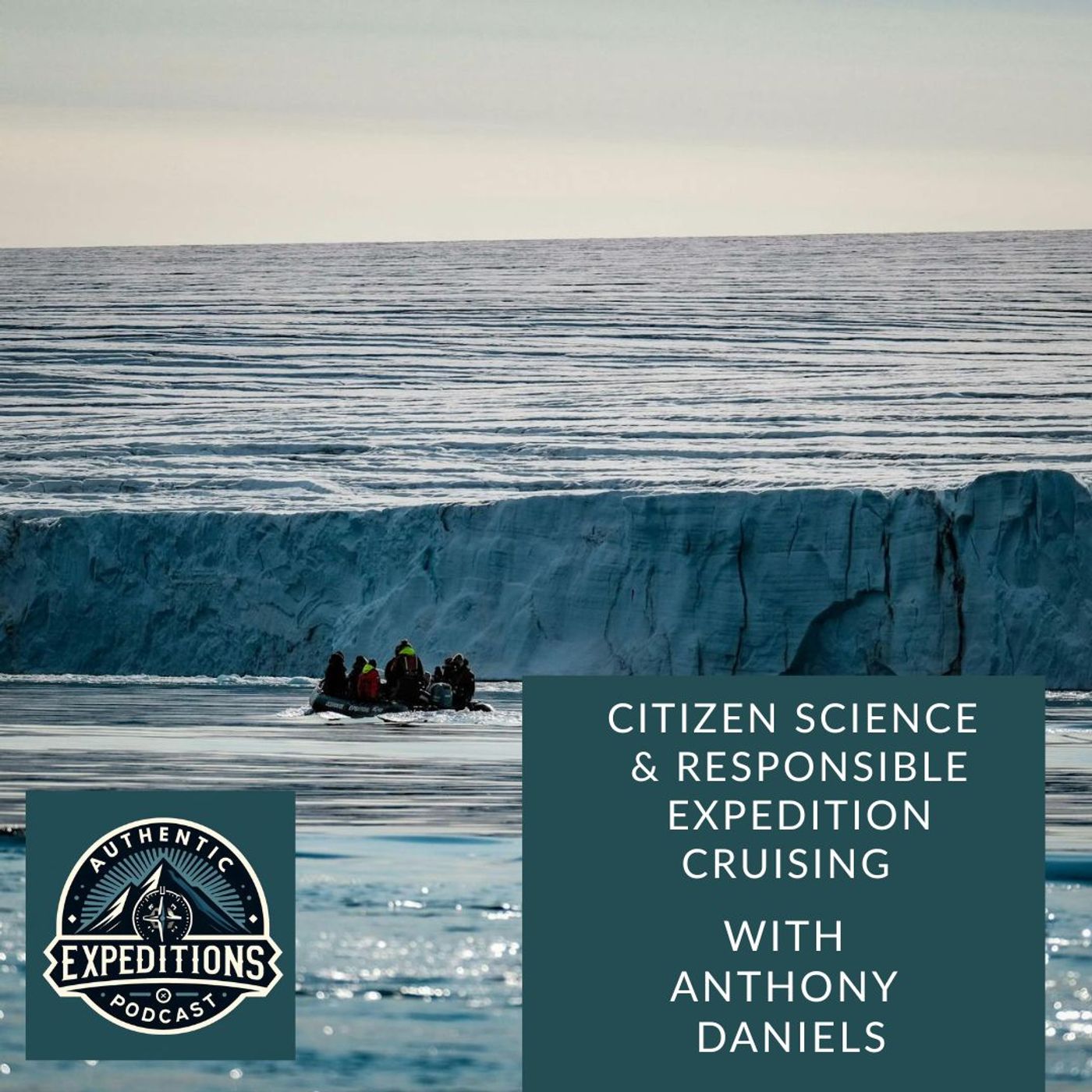
13. Citizen Science & Responsible Expedition Cruising with Anthony Daniels
Topics covered include the growing interest in citizen science, community involvement, the appeal to solo travellers, and the strict environmental guidelines that govern expedition cruises. Anthony also highlights popular destinations like Antarctica, the Arctic, and warm water locations like the Galapagos, emphasising the importance of responsible travel.
Time Stamps
02:01 Evolution of the Expedition Cruise Industry
03:32 Understanding Expedition Cruises
05:17 Citizen Science on Expedition Cruises
11:00 Solo Travel and Community Engagement
15:34 Popular Expedition Destinations
20:23 Responsible Travel and Environmental Impact
Featured Cruises To find out more about expedition cruises contact Jane Middleton on +44 (0)7971 568155 or [email protected]
Plan your next cruising adventure with Authentic Travel company
Producer: Sue Stockdale
Sound Editor: Matias de Ezcurra
Welcome to Authentic Expeditions, the show where we explore the art of traveling with purpose, curiosity and a dash of adventure. My name is Sue Stockdale, I joined by Anthony Daniels, UK and Ireland General Manager for Pwnant, and Chair of the Expedition Cruise Network. Anthony will discuss citizen science, why travelers are craving more meaningful impact, and how the industry is navigating responsibly and sustainably in some of the world's most fragile regions. I hope you'll enjoy this. Welcome to the podcast Anthony, it's great to speak to you today.
Yeah thanks for having me, I'm very excited to be here today. Now you are a number of hats, I know you're UK and Ireland General Manager for Ponant, and the Chair of Expedition Cruise Network is that correct? Within my professional capacity yes, I joined Ponant just over a year and a half ago, and just in the last couple of months I've very proudly been given the role as the Chair for the Expedition Cruise Network, so very exciting times at the moment. Can I imagine that you've been in the cruise industry for a number of years?
How did you get started in Anthony? It's really interesting, I've been in the cruise industry now for, I worked at the other day about 37 years, it is a fantastic industry and I've had the pleasure of working with some really interesting products and I started actually in reservations for Norwegian Cruise Line, and since then I haven't looked back, so I worked my way up through Norwegian Cruise Line, then went into Sales, I worked for Festival Cruises that doesn't exist anymore, so that ages me already.
I worked for Cunard, I was there for a while, I was luckily enough to see the launch of the Queen Mary II, and then I've worked for Regent Seven Seas, which is one of the luxury brands, and more recently moving into Expedition, I joined Hurtigruten and I was at Hurtigruten for nine years and I was part of the team that went through the transition from Hurtigruten to HX Expeditions, and obviously now they've split and have two very, very distinct brands. I left them a couple of years ago and then joined Ponant as I say last summer, so it's been an interesting, eclectic kind of portfolio of experiences.
And I guess during that time, you'll have witnessed quite a change in the Expedition Cruise and Cruise Market, which has really grown and changed over the last few decades. What are some of the highlights that things that you've seen that are general trends that have been changing? Yeah, you're absolutely right. When I first started, I think when anybody ever mentioned Expedition, or even going to some of the places that we can get to now, it was seen on very uncomfortable ships, shall we say? Not really designed for quality or comfort or even just from an experience point of view.
So I think it's just been exciting to see that under very strict control, I must add, because I think that's something we've got to make sure is very clear with Expedition, under very strict control that the ability that we now have to get to some of these remote places has really opened the world for so many people. It's been interesting the evolution of the guest profile through the companies that I've worked for, but also under the chairmanship now that you see the new brands that are coming through, the smaller ones are becoming a lot more dominant because they're real specialists in their field and their destination.
So I think it's the ability that the companies have got to find ways to find these new destinations, but the actual engagement from the guests, the guests absolutely love the experience and the ability and it's really pulling in people, even though we sit under Expedition Cruise Network, it's actually appealing to people that aren't traditional cruisers, those that like touring, adventure, safari, really immersive, local, cultural experiences, they're the ones that are starting to look at this as actually an opportunity and they don't class themselves as cruise.
It's interesting you say that because I was reflecting as you were speaking that we often make the assumption that our listener has an awareness of what Expedition Cruise is and how it's different from the mass cruise market. So would you typify it for somebody who maybe has even heard the phrase Expedition Cruise but doesn't quite understand what it is? It's really interesting because there's a lot of conversations about the terminology that we use and sometimes it's a little bit insular, a little bit industry conversation.
So the word expedition actually sometimes can conjure up the ships I've referenced in at the start of my career, the very small, very science-led ships that didn't really have creature comforts on board. So I think there's the terminology we've got to be really careful with because actually what the guests that have taken that step to travel with Expedition companies is the adventurer. I've said on many occasions it's not an age, it's an attitude. It's somebody that wants to go and see these beautiful remote places at the world and the only way to do it really is on sea.
One of the big transitions we're seeing are the wildlife enthusiasts, whether it be the big five from Africa, they're now looking at the big five from the polar regions or bird life transition into places like staff are to go and see the vast amounts of bird life. So I think the client base is kind of moving in our direction. And even those that are real big fans of wildlife TV programs, they're seeing now that there's an opportunity that I actually can go and see these in their live environment, which I think is incredibly exciting opportunity for everybody.
Now you're introducing into the conversation and to know this idea about involvement of the guest in the experience, so not just stand on the rail and look over board and not have any other level of participation. One of the things that I know many expedition cruise lines do these days is an element of citizen science and that's something in particular we're going to just talk about a little bit more detail today. What is citizen science? Well essentially in a nutshell it's allowing and inviting the guests on board these trips to actually be part of the experience and not just stand on watch as you rightly say.
All the expedition companies offer this in the sense of engagement for the guests. So what used to happen, and I'm sure there's still an element of this, a lot of the kind of the guest experience of any holiday they're going on is a little bit of kudos to going, I'm going to the best hotel or the best restaurant or the best location. What we've certainly seen is a shift of, I've gone on this experience and this is what I've learned or this is what my involvement's been. I remember one of the stories we had at HX was this lovely guy and I forget his name is calling Jim.
He went on this trip to Greenland and every day the ship stopped. He didn't do one of the excursions that was on offer from the guests. He went with the crew when they were doing beach cleanups and that was his whole purpose for that trip. You see these stories as we all do about the waste in the sea and the impact is having on sea life. He was a real inspiration that I want to go and help. And there's these amazing pictures of him up in one of the coastal stops that we did in Greenland where he was there helping dig out one of these fishing nets that had been caught and trying to save the wildlife.
There's elements of that that you're seeing and I think that sense of well being and supporting the communities that we sell to and also the wildlife and the sea life. I think there's a lot of that and I think that's really lovely to see that actually there's a desire for people to be involved in that. A lot of the companies work with NASA so you can actually download an app when you're on these trips and you can scan the clouds from below while NASA is scanning the clouds from above and it gives them knowledge.
So something is, I'll say basic, that's not basic. This technology, you take that kind of technology is basic these days, don't you? But the impact that it has for the environment and for what NASA are learning and what they're sharing with governments is fantastic. So if you can be part of that and say that was part of what I did on my trip, I think that kudos now is what really people are coming back and feeling good about themselves with. So it strikes me that there's then a follow-on element of so what happened to that data?
How was that science used? A bit like filling in a customer feedback form. We're always asked to do that. We never know what happens to the data. Absolutely. How do you think that cruise lines then or the scientists involved are able to then keep the guests engaged post cruise post voyage? That's a great point again. It's an area that I think the industry needs to do better. That's not being critical. I think sometimes I'm not sure we all actually understand that picture and we always set the storytelling.
So part of the storytelling is the engagement but the second part of that storytelling is impact. Was it actually done? All of the companies produce CSR reports and you'll see a lot of the achievements in there but a lot of the CSR reports are very big documents. I read through the ones that my company's creating. I look through some others as well and there's amazing stories in there. And I think what we've got to do better as an industry is actually pull those out and say this is what was achieved.
And I know that there's been stories of money raised by guests on board ships that's helped fund foundations in out of reach places. We need to do better as an industry to really elevate that storytelling because I think that imparels and inspires people from what I've seen. You're making me think, Anthony, that there's many reasons in why guests come on board expedition cruises and those that are coming from a perspective of creating impact and maybe the environmental aspect that that's more of a need that they have compared to others who may want to be going to an amazing remote place to have more of a restful experience and less focused on the environmental impact.
Yeah, I think you're right. I think a lot of people come to expedition for destination. This is very kind of sweeping statements. I know that's not true for every client but people come to a lot of the expedition companies because they're going to Antarctica, they're going to Greenland. There's now a big growth in warm water expedition, so French Polynesia and Kimberley and Asia and Australasia. So there's the desire there from a destination point of view. There's definitely a lot of people that see the amount of scientists that are working on board these ships that all of the companies, Ponant, included, will take groups of scientists so they can do their work while they're in these remote places and then a lot of guests will come so they can learn and listen and watch.
But what's been lovely to see is those that have come for destination experiences are coming back with a completely different view of what actually expedition is offering. One lovely story where we look at consumer reviews and we do a lot of insight reports so we can understand thought processes of guests and travel agencies and companies we work with and I think one of the reports that we saw recently said was the community engagement a high aspect of why they chose this trip and it wasn't. It was still in the top 10 but it was below destination and a few other things so it was maybe seven or eight.
They then asked the same guest about what was the most enriching experience from that trip and that local community engagement was one or two by nearly every person. So I think there's an element there that we've got to use that knowledge to say actually you might not look at it as a priority but this is what you're going to come back with. We're very lucky at Ponant we've got the world's only luxurious icebreaker so when she goes to Greenland the first ship to go to some of these remote communities and will be taken fresh produce for the first time in four or five months.
So there's that type of engagement that really does have a major impact. So I think there's different reasons why some people come but then when they've been they go actually that's the reason why I should go again. So given that their expedition cruise has got quite an active element to it as we've been talking about Anthony and wondering if that is of appeal then to solo travellers what's your experience of whether that market is growing? It absolutely is and it's been great to watch because I think what people are realising understanding is that it is a different type of holiday that every day there's a different experience is a kayaking experience or is a hike or a walk or a science trip that you can go on and that engagement you're getting with like-minded travellers and like-minded people takes away any kind of concern any solo traveller may have about being on board these ships.
I've travelled on my own and it's fine for a while but there's always those areas that makes it a little bit uncomfortable I would say but I think on these experiences you're making those bonds on the excursions and you're making those bonds on these science experiences that you then go let's have dinner together, let's go for a drink let's have this and what are you doing tomorrow? So I think in all of a sudden you get that camaraderie that you build that experience and I know for a fat there's a lot of companies now that offer a better solo pricing structure than we've seen before and I know I have two hats I'm always very careful not to over index just on porno but I know from our perspective it's an ongoing strategy that even today we've got over 150 sailings that offer no single supplement and many other cruise lines offer the same so I think it's a fantastic experience for for solo travellers because it's so active and so engaging.
And we've already had an earlier episode on authentic expeditions podcast listener focused purely on solo travel so I would recommend you have a listen to that as well just to pick up on what Anthony is saying here. Absolutely. You mentioned that you have scientists on board and many cruise lines do these days. What sort of science have you experienced people participating in? I can certainly recall images I've seen of people standing with scientists who've got helium balloons and they're doing some sort of weather experiment.
I'm sure there's loads more things than that. Give us some examples. I've said that in which as well they've got these kind of is like a very long silver kite isn't it? It's very. So it's picking up particles in the air to see what kind of the impacts are having. There's things like we work with companies like called happy while which you're tagging and you're taking pictures of well movement and then you're sending it via this app so then they can track their kind of migration series and where they are.
You work with things like the Southern Ocean Sea Bird Survey so again taking pictures of the birds when they're in flight or when they're in places like South Georgia and then you're taking them ascended them to a central place. But then a lot of the companies will also take clients out on the rubber ribbots and then they'll have a science boat that goes. Now generally the science boat will just have to crew and the scientists on board but we will also follow that and then what will happen is they'll come back on board the ship and then talk about everything they've seen and they'll show the video clips.
But they'll also have live footage from these so there'll be some guests that might not be on the ribbots with them but they'll be watching them from the comfort of the ship on a big screen while they're listening to the scientists. But when you've got the equipment like we've got underwater cameras and you've got drones which are used just for the scientific approach and the views of the destinations that we're going to. So there's so many areas that we see and again like I said earlier there's the beach clean ups and the measurements and it's really interesting again it's a little bit like I said earlier about people come from one thing and go for the other they'll go I'll do a little bit of that and they won.
By the end of it that's all they want to do they're constantly involved in what's going on today with the science labs you know you have one or two science labs on some ships they bring back they've got all of the equipment then even the guests then can start looking up what we found in the ocean so there's such a wealth of opportunity there it changes the perspective of what the the vacation is for. It sounds like it's all about the experience and through the guests being up close and personal with that experience the scientists seeing the impact the science is having is what's compelling for them.
Yeah it is and a lot of the crew not just the sometimes also our guest scientists on board the ships but a lot of the crew have come from university and studied various level of science and various subjects within the science world and they now work on board because it gives them the ability to use their skills so you're getting some amazingly intelligent people that are taking people on excursions around the Galapagos and talking about the geology or the wildlife there that that's something they've studied for the past four or five years at university so you're getting that first hand experience with someone that's an expert in the area that really kind of bringing it to life and like I touched on earlier it's nice to see that this isn't just the polar roots this is now transparent from if you go back to when I started the industry there was really not a lot of expedition around or certainly not from a measure point of view this is now something that's becoming a global opportunity to those that have done the polar they're now going right now let what else is there where's the science trip next and it's going to French Polynesia or Kimberly or wherever it may be so the world is literally opening up in terms of opportunities
for guests to travel absolutely where are the places that people want to visit in 2026 well still by far the number one is Antarctica certainly from a UK perspective we're seeing that Antarctica and it's not just the UK it's the one destination that seems to be on everybody's list to go we need to do Antarctica but that's now people that have done that maybe once or twice because you can get a lot of different experiences in Antarctica you can do short 10 night trips you can include Patagonia you can do South Jordan the Falklands for 27 nights so you can do some really different trips down there but then the second one is the Arctic I think location wise that's an easier place to get to for a lot of people so Greenland Svalbard is becoming incredibly popular so the land at the polar bears and I remember some saying there's more polar bears than humans up there but luckily never the twain shall meet most of the time so it's an amazing experience there for the wildlife but then as I said earlier then it's starting to grow and I think places like Japan places like Kimberly French Polynesia because of the wildlife and then you're looking at different types of experiences but still with scientists so they're taking you off and you're doing these experiences and what
I should have also said is Galapagos I would say Galapagos is probably one of those areas that falls just behind Antarctica and the Arctic it's then Galapagos is the next step and then it's the Asia Australasia kind of markets that start to really start indexing well in the reviews. Where's your favorite place to visit then Anthony? That's a very tough one. One of the best experiences I had was this summer and we went up to Svalbard and was only there for a short trip it was four days five nights but the amount of wildlife that we saw in that period was astonishing we saw Belugas we saw Minky Wells we saw Seals we saw Walruses we saw thousands of birds we saw rain days we saw Arctic foxes we just didn't see a polar bear because we have centralized around a long year being and there was a couple of the expeditions ships coming in and we were visiting them I remember talking to the captain and the pilot ship that been in our ship you just back from doing the west coast of Svalbard how many polar bears did you see and he just shrugged and went we lose count I couldn't tell you it's like I'm the idiot it's like we're all going to see them so is that kind of experience and you think this is relatively so close to home that if you want to get that taste of a expedition going up to Longly being you can spend the two or three nights there before you sail on the ship and it's such a nice easy accessible place that you can time with the trip to Norway that I think is probably because I went there in the summer is freshen my mind but a leave of the experience and given you saw all this wildlife things has it changed your
perspective towards nature back in this country in the UK it absolutely has because you see in the news these days and social media about the amount of wildlife that's in and around the UK and I think that's another area that actually from a UK point of view doesn't seem to be as popular so the headbridge is an incredibly popular expedition location for pretty much everybody outside of the UK again I know it's a sweeping statement of fully aware of that and there's a lot of brits that love go in there it's a stunning area but it's not on most people's wish this from the UK point of view I think because it's so close but actually what it does offer is similar to what I said was spelled by you've got a close location a real diverse opportunity with wildlife geology and scientific opportunities that actually we should be looking at that and a lot of those ships will come in around the UK and they'll come from the southern part they'll come up round Devon and Cornwall come up Wales, Ireland and do a lot around the island coastline and then up into the Hebrides and Scotland so I think you're absolutely right there is even closer to home found by this and really nice opportunities the expedition experience might just help people to
review their engagement with nature no matter where they are not just on an expedition cruise yeah I think so and I think that's where the peel is coming from so many people are a lot more caring and conscientious travellers and I think that really helps not only if we could look after the wildlife and the UK but what positive impact can we have as travel companies and travel people but when we're doing this we need to leave the right footprint we need to come back with the right storytelling and we need to have the right mindset to say well when we're in these locations let's make sure we do the right thing and then when we come back let's tell the right story so that everybody can actually learn from that so I think that storytelling and care of those communities wildlife and people I think that's something that's resonating through so many people now I pick up on the word responsible and that seems to me to be part of what we're saying in this conversation is that travel and enjoying it oneself on an amazing expedition cruise can be done responsibly and have a much more positive impact than just a luxurious experience for a couple of weeks you're right to flag that that's one of the areas from a cruise industry that is constantly
spoken about it's the impact of travel not just cruise we know that we know it's should we shouldn't we and I think from an expedition point of view we're a very small percentage within shipping but what we do from an output with positivity is streaks in a lot of different industries so I think where we work with local governments and we work with scientists so they travel with this to learn and then we can learn and adjust it as a community I think that's the positive that we get and we work under very strict guidelines the people like IAATO and IAECO who set the deals and we set the parameters of what we shouldn't shouldn't do and it's a very strict rightly so it's very strict and even things like when any of the ships are down in Antarctica you can't have any more than 100 landing at any point you're looking at the fuel now in northern europe in Scandinavia about size of ships and what fuel you can and can't use it's incredibly strict now and it is restrict in these destinations to the companies that operate correctly so I think that's a fantastic way that we're all working of course every company can do better but if you look into everyone's ESG reports and you can see that we're very open and honest about what we've achieved what we're aiming to
achieve and what we're still working on many companies now are creating ships that are zero impact we've got a ship at Ponant that we were designing at the loan is going to come out in 2030 and many other companies are doing the same thing so those things are so integral to the growth of the market to ensure the clients are understanding our ethos but also what it means is that we're doing it as ethically as possibly we can whilst we're learning and bringing back those learning to the governments so we can set in the right tone in the right pace.
It's fascinating what you're saying much bigger question than just going on expedition crews and having a lovely time there's a whole greater question about responsibility and impact and it's really heartening to hear that the expedition crews operators are working within those stringent guidelines Anthony. Yeah and we know it's the right thing to do we know that rightly so people are questioning and saying are you doing the right thing so we've got to be able to stand up and back up our words and back up our plans and actions so that's why it's very public we don't hide anything from our ESG reports as I know many other companies do and we need to give the reassurance that this is done in the right way and what we're learning is actually having a positive impact.
And what's on your travel plans or do you live all your year round in an office or do you get out there on the ship? Unfortunately I don't get on the ship's nowhere near as much as I'd like but we've got a few trips that we're planning for next year one that I do want to get on is on the Commodore Shaka which is the icebreaker she's such a unique ship I definitely need to get on board her it's just it's been a lot to do from a UK perspective point of view so I've not had the time so I need to sort that out but in at the same time I think what would be nice is actually we've got some new itineraries around America so the great lakes and we're doing some down the west coast of America as well that look really appealing so I think there's a few different areas in America like to get to because they're so new and I think that would be none trying to get ahead of the curve before everybody else gets them before me I think.
Well I hope you get to enjoy some of those things it's been a real pleasure to speak to you Anthony fascinating to discover what expedition cruise ships are doing in regards to responsible science and helping get guests involved. Thanks very much there's been a pleasure talking to you. Thanks Sue and thank you Anthony for taking your listeners on a bit of a scientific journey. I must have met I'd never heard of cities and science before I went on an expedition to Antarctica last year but whilst there I got involved doing the NASA cloud scanning and counting birds as you just described Anthony and it was great fun in a real learning experience.
Expeditions are a great way for guests to get first-hand experience in scientific projects and gather important data so we can monitor the effects of climate change on the local environment. In fact on Aaltrip we had a team from the World Wildlife Fund on board with us and they were gathering data and skin samples from the whales that we met this allowed them to monitor the whales general health over a period of time and each night they would give us an update as part of our daily recap which was really interesting.
If you have any questions or would like more information please get in touch with me Jane Middleton at the Authentic Travel Company can find my details in the show notes and I look forward to her next episode thanks again so make sure you follow us subscribe and share it with others who enjoy traveling to remote places and I look forward to connecting with you soon.
 Apple Podcasts
 Castbox
 Castro
 Goodpods
 Moon FM
 Overcast
 Pocket Casts
 Podbean
 Podcast Addict
 Podcast Republic
 Spotify