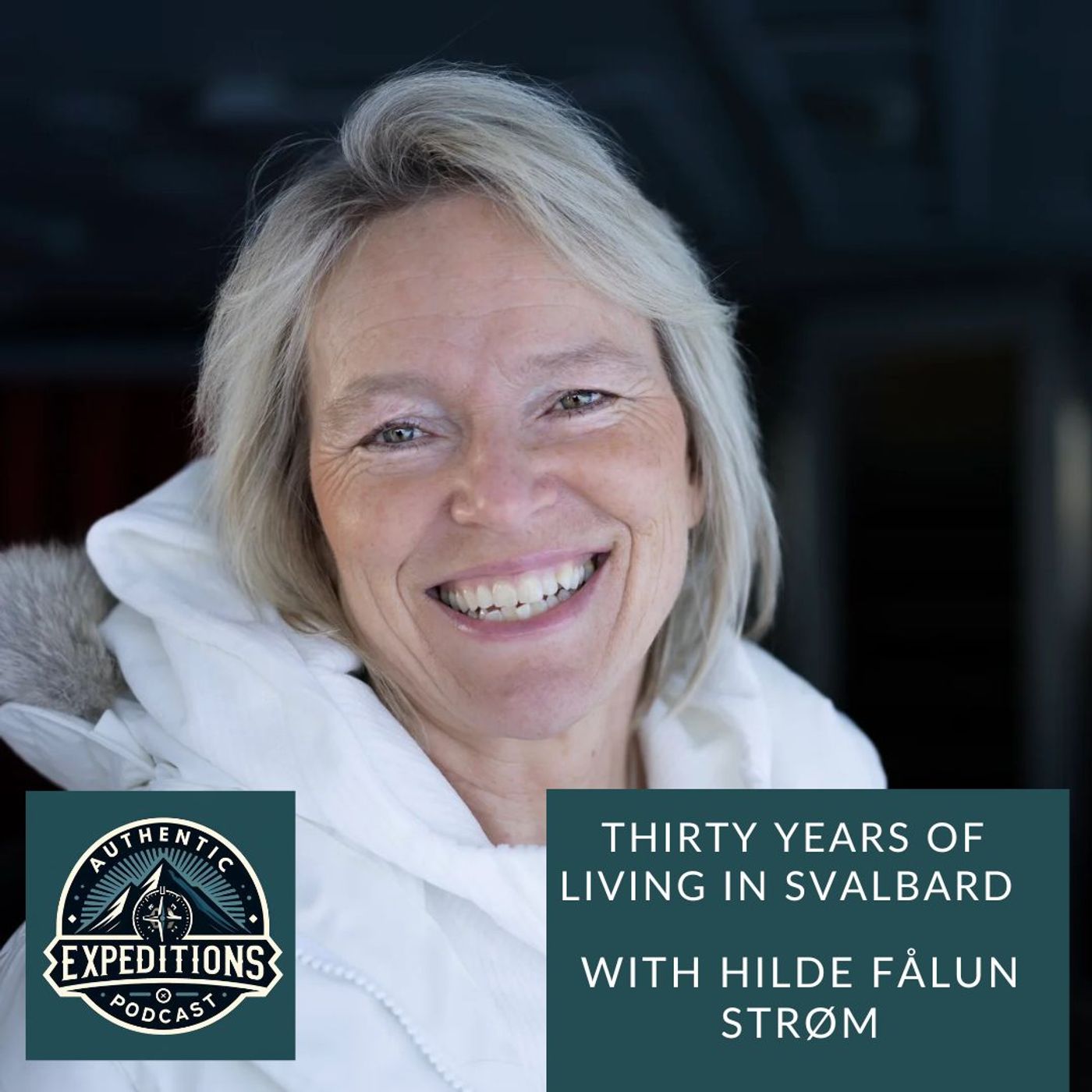
14. Thirty years of living in Svalbard with Hilde Fålun Strøm
The conversation also explores Hilda's role in promoting sustainable tourism, polar bear protection, and climate change awareness as godmother to an expedition cruise ship.
Listeners will gain a deeper understanding of the Arctic's natural beauty, its rapidly changing climate, and the pivotal role individuals can play in conservation efforts.
Time Stamps
02:04 19 Months in a Trapper's Cabin
04:42 Impact of the Experience on Perspective
05:40 Expedition Cruising and Wildlife Observation
10:16 Climate Change in Svalbard
13:03 Polar Bear Protection and Education
19:23 Final Thoughts
Featured Cruises To find out more about expedition cruises contact Jane Middleton on +44 (0)7971 568155 or [email protected]
Plan your next cruising adventure with Authentic Travel company
Producer: Sue Stockdale
Sound Editor: Matias de Ezcurra
Hi, I'm Sue Stockdale and welcome to the Authentic Expeditions Podcast episode 14. Today my guest is Hilde Falun Strom, an Norwegian Arctic Expedition Leader who has spent more than 30 years living and working in Svalbard. Hilda has spent more than 19 months living in a trappers cabin during the COVID-19 pandemic and she talks about that experience and her role in promoting sustainable tourism, protecting polar bears and the impact of climate change in Svalbard. Welcome to the podcast Hilde, it's fantastic to speak to you today.
It's an amazing opportunity for me to be here with you today Sue. Thank you. When we're recording this, it's almost winter solstice 24-hour darkness up there in Svalbard. What's that like Hilde to live in that type of environment for so many months without seeing this on? Well, I have grown to love it. Clearly, this is my favourite time of year. Everything is dark all the time. This is my 31st winter so I truly fell in love with that dark season that creates this beautiful here for Northern Lights in winter and all the shadows.
I just love it but it's 24 hours of darkness and routine is key. For me, I would think for all at least humans living here. I would imagine that people just want to hibernate. Is that the case? The days that you have off work or are off work. It's easy to say, well, it's completely dark outside. I'm just sleeping in for a few more hours but that's where the alarm clock should go because it's really important to stay active in the dark season. So I tend to be maybe not as much outside as I do when we have midnight sun and what we call the light winter but I love it but it is absolutely completely dark so you have to adapt to that.
Well, I can't imagine what that must be like. Now, in addition to your many decades of living in Svalbard, Hilda, you also spent 19 months at Bamsebu. Tell me more about what that was all about. Ever since I moved here in 1995, I had all read about the trappers, both females and male trappers and I found it so fascinating. So I really wanted to experience that because I completely fell in love with this place. I felt so grounded, so connected to the nature and I wanted to experience that throughout the full year.
So we planned for nine months and originally I planned this event with my husband but it took me quite a few years to understand that that was not his dream. So I met another explorer that joined me for what we planned for as I said nine months then COVID happened and it became 19 months. For me, that was a dream coming true. A total bliss. It was exactly what I wanted and wished for but it was so much more. And I don't think anyone can prepare properly for what that is. Even though I have tons of experience, I have 23 years since Svalbard already but it was all sorts of experiences both inside and what's happening around me.
So this was a trappers cabin built back in 1930. It's uninsulated, no running water, no electricity and not even connectivity. So to communicate with the world, we had VHF radio and we also had a satellite connection powered by solar and wind and we had a windmill and we had two solar panels and the heating system was of course wood and that was driftwood, us picking driftwood from the beaches originally from the Russian area and it's been in the ocean for probably a few years so it was quite dense.
So it was a challenging part and also being the two of us and no outside help or interaction during 19 months but in long long times like four or five months at a time we had no other contact with anyone. So being the two of us handling all the situations more than 100 polar bear encounters, a lot of weather three month of complete darkness, two winters in a row was defining and it was challenging but again it's hard to find words actually but it's the most transformative experience I've ever had in my life but also it was a great company and we both work hard to survive and to deliver on all aspects also as citizens and scientists but first and foremost just stay alive.
We could have a whole podcast just talking about that experience, Hilda. How did that experience now shape your perspective of how you view Svalbard? Well first and foremost I think it changed a lot in me and my perspectives I never had less, I never felt richer, I never been further away from people never felt more connected also to myself and the natural world around me but also I experienced the wildlife very close and I saw that if we leave them alone and understand that we are the visitors I think they're fine having us around but we need to make sure that they have their space to hunt and also the peace and quiet that they need to live their life which is a lovely segue to bring us into this topic of expedition cruising and going via ship to explore Svalbard given what you just said there about the ability to observe wildlife to give them their space and so on that can often set up a bit of attention between how do we fall in love with a place that we don't know and we have to go there to get to know it to fall in love with it and want to conserve it now you're a godmother of a couple of ships I understand, Hilda does that bring a level of responsibility given what I've just said?
Yes I'm very honored but I also feel a great responsibility it's a given opportunity to protect the ship, the crew and all the voyages the guests on board so the high protector of the ship and the operation I love to stay in touch with them and also follow their voyages around the world but also I'm on board at least once a year where I share my passion for the natural world and how my values and principles are and when it comes to conservation wildlife but also that extremely important work that tourism can play in being citizens scientists, being eyes on the ground, being maybe even more importantly connect to the natural world and fall in love with the natural world so in that role of godmother when you're on board the ship do you encourage the guests on board?
how do you help them get that joy? I'm imagining that you had when you were in that trappers cabin experiencing nature up close and personal people want to ship are only getting a glimpse of a nature in a short space of time how do you help them maximize their experience? Visiting the polar regions does something to people I've seen in appearance, fallabar and in the Arctic in general and I've seen it in Antarctica so it is something with this pose that really has an impact on people I've seen people cry they have a feeling of being on the outpost of the world they feel that this is so much bigger than them so they all want to know how can we participate and my role I think is to make them understand that we all have a role to play and the no task is too small and we as individuals are the ones that can move the needle collectively so I just try to encourage them to do purposeful fun engaging things in their everyday life and also of course while on board discuss what kind of actions can we do together to move the needle and to do what we need to see the social tipping point and we need to see the policy change we need the big structures to come along so I encourage them to speak about the places that have been to share their story to share their feeling that they have when they see this if they see a polar bear or they see a glacier or a penguin or what have you I think it's passion between us humans that can move another person that hasn't been here
so I truly believe that when we're here when we experience this can share this passionately when we come home and in our own lives we have so many options there is choices I mean we have a choice and in the end of the day it's a moral choice if we want to make sure that every step we take is a little bit more consider it is a little bit more thoughtful is a little bit more sustainable wise words that you're sharing Hilde in terms of no person's too small to make a difference and passion is something that's a really important ingredient that creates that ripple effect absolutely and the ripple effect is what we're looking for imagine if you do something when you come back from a trip like this you speak to your colleagues or your communities or whatever and all of a sudden you see what is now called the Greta Thunberg effect that you can really move a lot of people so that is what I do that's what I've done ever since this avalanche in Longyearbyen which is today since this podcast is made December 19th and just three hours ago 10 years ago that was the day that really changed my life this avalanche in 2015 that destroyed 11 normal neighbor houses and I was very involved in the whole operation there so that made me take a stand and decide on what to spend the rest of my life
doing I've dedicated my life to speak about this and it's so fulfilling it's so purposeful and fun and engaging and I've learned so much ever since what a positive outcome from obviously a very tragic event held in terms of how you're choosing to spend your time for those who may have a brief glimpse of Svalbard for example going on an expedition cruise you've been there for those decades give me a sense so what are those ways that you observe that the art ticket is changing I moved here in 1995 and it's three decades and in these three decades the middle temperature during winter has risen by 10 degrees which is absolutely I mean unheard of it's the fastest warming place on earth this is the epicenter of climate change so what is when I arrived here in 1995 we had longer winters basically we had much more sea ice sea ice is so extremely important not only for what we see polar bears and seals and for us to travel on it but everything that happens underneath the sea ice with all the whole part of the biodiversity in the oceans starts underneath the sea ice and also the reflection of the energy from the sun the white surfaces the cryo spheres of the earth so it's just amazing to have been an eyewitness to the lack of cold winters where you have stable sea ice
for the polar bears to travel on and all this and also warmer temperature of course then also in the ocean new species in the ocean more rain on land so we see that tundra is covered by ice or frozen snow so it's harder for rainders or other animals to get to their food plants I've seen more precipitation this avalanche was an effect of that in 2015 glaciers has retreated with kilometers and hundreds of meters in height and though I'm sure wherever the listeners are living they can see small changes but they go so slowly and up here it's actually been changes every single year and for so many years I didn't want to see that I was in despair I didn't want to touch up on that because it was scary and what could I do and then this avalanche was the turning point for me the day where I really changed my life and I decided to have other focuses and joined forces like yourself everyone that wants to move this in the right direction and has there been a change from a human perspective or more people traveling to a small part who lives there what's changed over the last 30 years the number of people living here has also rise since 1995 now it's almost 3000 people it's still a small community but the guests coming here is increasing though it has been quite stable
for a couple of years it had a peak in 2019 and after COVID it's slowly recovered but it's still a lot of people coming here during summer and winter to see this very different island with no trees and the closest destination to the north pole where we have polar bears around us we have seen an increase in tourism and we have also seen an increase in discussions around protections and conservation we have much more regulations now than we had a few years back and myself an expedition leader the Arctic expert guide the upcoming expert guide training is now harder and it's wider and we see the governor has put boundaries for distances to polar bears during spring season and also summer season though it isn't scientifically proven that it shortened the life of a polar bear it's I guess in the values of us trying to disturb as little as possible and still have the opportunity to see a polar bear and otherwise life and doing that in the right way I think that's still possible and you're involved in polar bear protection I understand I'm a proud ambassador for polar bears international so they do science work they do education and outreach and they also do policy they are sought after partner for helping out with regulations in the Arctic so they use
the opportunity here in Long Edvin as I'm part of to educate guests coming here that many of them will never see a polar bear even if they are here some of the cruise tourists only come to Longyearbyen spend a couple of days here and then they leave many of the tourists coming with a plane many of them will never see a polar bear either so having an interpreted center where they staff the building with scientists from polar bears international speaking about the polar bears habitat how they live and also the threats of the population and I'm also part of the science team I'm part of the field team so it feels really purposeful and I love to speak to guests about polar bears polar bears are the icon of what's happening in the Arctic it's easy to share what's happening with the polar bears in combination with climate change which is the number one threat to polar bears we know that there are no polar bears where there are no sea ice so that's why the focus on sea ice is so extremely important both when it comes to tourism not ever break sea ice not outside the 12 mile zones or in the fjords it's illegal in the fjords so the sea ice is important but the whole idea of having sea ice is to try to
diminish the impact of climate change and reduce the rapid warming planet meeting polar bears I think is an amazing experience and we can do that without disturbance while doing that we can share the knowledge the passion and the reason why we should both protect the polar bears but also protect our natural world in general and work with the climate change issues and impact it seems education is one of the important things even if somebody doesn't get the opportunity to see physically a polar bear appreciation of the environment in which they're inhabiting an understanding can then bring a different sense for guests that's traveling in the Arctic absolutely on this knowledge that polar bears international is sharing is science-based interpreter center it's an igloo or it's what we call the ice house it's around around the igloo with the illustrations and figures and it's so easy even for those that don't maybe get the language that well can really understand this platform for sharing your knowledge around their polar bears their habitat and also the threats so a purpose a way of educating those guests that arrive to understand and learn about the region I think actually as also a tiny little part of tourism up here I'm in the council tourism board and also I'm a small
operator I'm an expedition leader on a few charters and ski and sail but I feel that it is my obligation and also tourism in general's obligation to share what's happening in the Arctic I feel that for wherever we go in the world that we need to learn about the places we visit and especially a place like Arctic it's not like what's happening here stays in the Arctic it has an impact to the rest of the world and this is the canary bird in the mine that's an expression that we use up here so this is the first warning or what's gonna happen to the rest of the world so it is important to understand and try to encourage and inspire people to bring that knowledge back through their own lives so important given you've spent all these decades held in Svalbard what are the highlights of the year as you go through those different times of long days of darkness and long days of daylight we said two words about this before we started this podcast so having the opportunity to wake up in the morning go outside it's completely dark but then if you move away from the pollutant light from my cabin and looking up and I see this beautiful northern light absolutely amazing so dark seasons are one of my favorites but I have to say that November but even more so February which has a little bit
of the same components when the light is starting to change dramatically and maybe February the most going from dark to light where you have all this pastel and you have blue hours for days it's like the Arctic is waking up with the most beautiful surroundings and everything is colored in that color if it's maybe pink or it's purple or it's blue or yellow it's absolutely amazing so I think February is my favorite but summer is spring we get midnight sun already this April 19th and it lasts until August 23rd so you can both do winter activities in midnight sun and the same thing all summer of course and bit of the autumn so it's hard to find a favorite but it really touched my heart and I love the fact that we have five seasons.
Well you're selling it very well as a place to experience Hilda from what you're describing to us here if there was a message you wanted to leave for our listeners to think about in relation to spa bar in the Arctic one thing that they can just take away and hold on their mind what would that be? My message would be either if it's spa bar or any natural place around them where they live is to reconnect to nature or to spend more time out in nature I think it makes us healthier happier more considerate and if we fall in love with nature we will also protect in nature that's my take and also another message is that we matter much more than we think we do takes only one person and that one person can be the social tipping point that we need to see to create a brighter future for our kids and their generations to come.
Wonderful. Thank you so much for taking the time to have this conversation today Hilda I've loved hearing what you've had to say and you've given me a level of excitement to get back up to the Arctic as soon as I can to experience it. Thank you so so much Sue and welcome back anytime. Thanks Hilda for such a passionate chat with Sue it was a real privilege to meet you last year in spa bar, along with your lovely dog Ettra. I loved your closing message telling us to reconnect with nature and how if we fall in love with nature we will want to protect it more.
I've certainly found that to be true from my own travels. I'm not sure how I would manage in 24 hours of darkness but when we do expeditions to the Arctic luckily it's summer so we get to experience the 24 hours of daylight which is a very unique experience and I'll admit a bit weird at first but you get used to it pretty quickly. Last year I got to visit Hilda's hut on Bamsiboo and was surprised how remote and small it was yet the setting was calm and beautiful and I take my hat off to you for staying there for 19 months.
Hilde you're so right when you say polar regions do something to people they get under your skin and have a real impact on you so if you would like to explore these remote regions and learn more about expedition cruising please contact me, Joan Middleton at the authentic travel company my details are in the show notes below. Thanks Sue and I look forward to the next episode of the Authentic Expeditions podcast. Make sure you follow us, subscribe and share it with others who enjoy traveling to remote places and I look forward to connecting with you soon.
[Music]
 Apple Podcasts
 Castbox
 Castro
 Goodpods
 Moon FM
 Overcast
 Pocket Casts
 Podbean
 Podcast Addict
 Podcast Republic
 Spotify